
Where Is Abusir and Why Is It Important?
Abusir is an archaeological site located on the desert plateau west of the Nile River, between Giza and Saqqara. It formed part of the pyramid field of Memphis, now listed by UNESCO as a World Heritage Site under “Memphis and its Necropolis – the Pyramid Fields.”
The site gained prominence as a royal and elite cemetery during Egypt’s Old Kingdom, particularly the Fifth Dynasty, though it remained in use for centuries afterward.
Who Were the Builders of Abusir’s Pyramids?
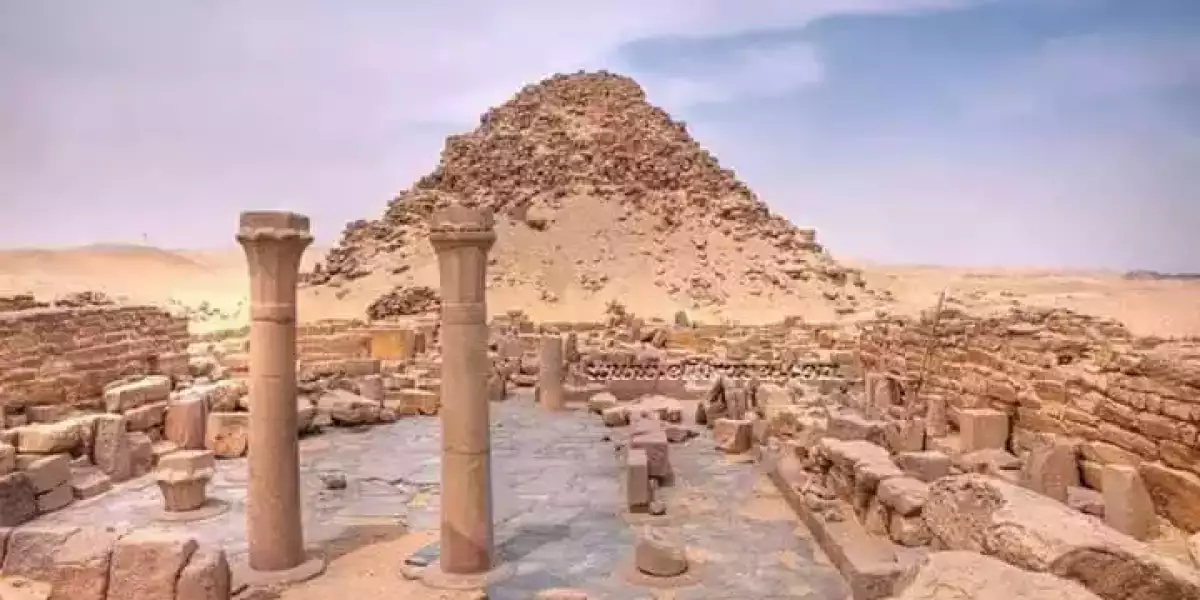
Abusir contains the remains of several royal pyramid complexes dating mainly to the Fifth Dynasty. The most notable pyramids belong to:
King Sahure – built one of the earliest and best-preserved pyramid complexes at Abusir.
King Neferirkare Kakai – his pyramid complex yielded the famous Abusir Papyri, the oldest known administrative archives.
King Neferefre (Raneferef) – his unfinished pyramid preserved remarkable royal statues.
King Niuserre Ini – his pyramid complex is among the most complete and architecturally refined at the site.
Overall, Abusir was the dynastic cemetery of Fifth Dynasty kings and their families.
Sun Temples and Religious Significance
Nearby, particularly at Abu Ghurab, the kings of the Fifth Dynasty constructed Sun Temples dedicated to the solar god Ra. These included:
The Sun Temple of Userkaf – the earliest known example of its kind.
The Sun Temple of Niuserre – one of the best-preserved, featuring an open courtyard, stone altar, and a great obelisk symbolizing the sun’s rays.
These temples represented the rise of solar theology, emphasizing the divine connection between the king and Ra.
Non-Royal Tombs and Administrative Finds
Abusir is also rich in mastabas and tombs of officials and priests from the Old Kingdom. Excavations revealed beautifully decorated chapels and the Abusir Papyri, an extraordinary set of administrative documents that record offerings, priestly duties, and temple management.
During later periods — especially the Late Period (26th Dynasty) — Abusir continued to be reused, with burials, embalming caches, and even funerary boats discovered in the area, showing continuous sacred activity spanning nearly two millennia.
Highlights of the Main Pyramids at Abusir
🏛️ Pyramid of King Sahure (c. 2480 BCE)
The first pyramid built at Abusir and the best preserved.
Features exquisite reliefs depicting royal processions, foreign tributes, and temple rituals.
Set the architectural model for later Fifth Dynasty pyramids.
🏛️ Pyramid of King Neferirkare Kakai (c. 2470 BCE)
The largest pyramid at Abusir (original height: ~72 m).
Began as a stepped pyramid, later converted into a smooth-sided one.
Its complex yielded the Abusir Papyri, offering a detailed glimpse into temple life and administration.
🏛️ Pyramid of King Neferefre (c. 2460 BCE)
Left unfinished due to the king’s sudden death.
Contained fine royal statues now housed in museums in Prague and Cairo.
🏛️ Pyramid of King Niuserre Ini (c. 2445 BCE)
The most complete and well-planned of Abusir’s pyramids.
Includes a long decorated causeway, a large mortuary temple, and nearby pyramids for queens.
Queens’ Pyramids and Royal Family Tombs
Notable among these is the Pyramid of Queen Khentkaus II, wife of Neferirkare and mother of two kings (Neferefre and Niuserre). Her temple reliefs show her receiving offerings like a pharaoh, suggesting she may have ruled in her own right.
Several smaller pyramids nearby belonged to royal women and high-ranking courtiers.
Notable Tombs of Officials
Tomb of Ptahshepses
Vizier under King Sahure.
One of the largest non-royal tombs in Egypt, decorated with grand columns and fine reliefs.
Tomb of Imi-shepses
High priest during the Fifth Dynasty.
Decorated with daily life scenes and Nile boat processions.
These tombs highlight Abusir’s role as a center of both royal and priestly power.
Major Discoveries at Abusir
Mohamed Ragab Ghoneim 1, [11/11/2025 06:41 م]
1. Abusir Papyri – The oldest surviving temple administration records.
2. Statues of King Neferefre – Masterpieces of Old Kingdom art.
3. Sahure’s Reliefs – Early depictions of trade expeditions to Punt and Libya.
4. Funerary Boat – A 17-meter-long royal boat unearthed near the tombs.
5. Embalming Storerooms – From the Late Period, showing continued ritual use.
Summary
Abusir is a gateway to Egypt’s Old Kingdom, revealing the transformation of royal religion, art, and administration. From the pyramids of Sahure and Niuserre to the temples of the sun and the tombs of high priests, the site offers one of the most complete portraits of ancient Egyptian civilization in transition.